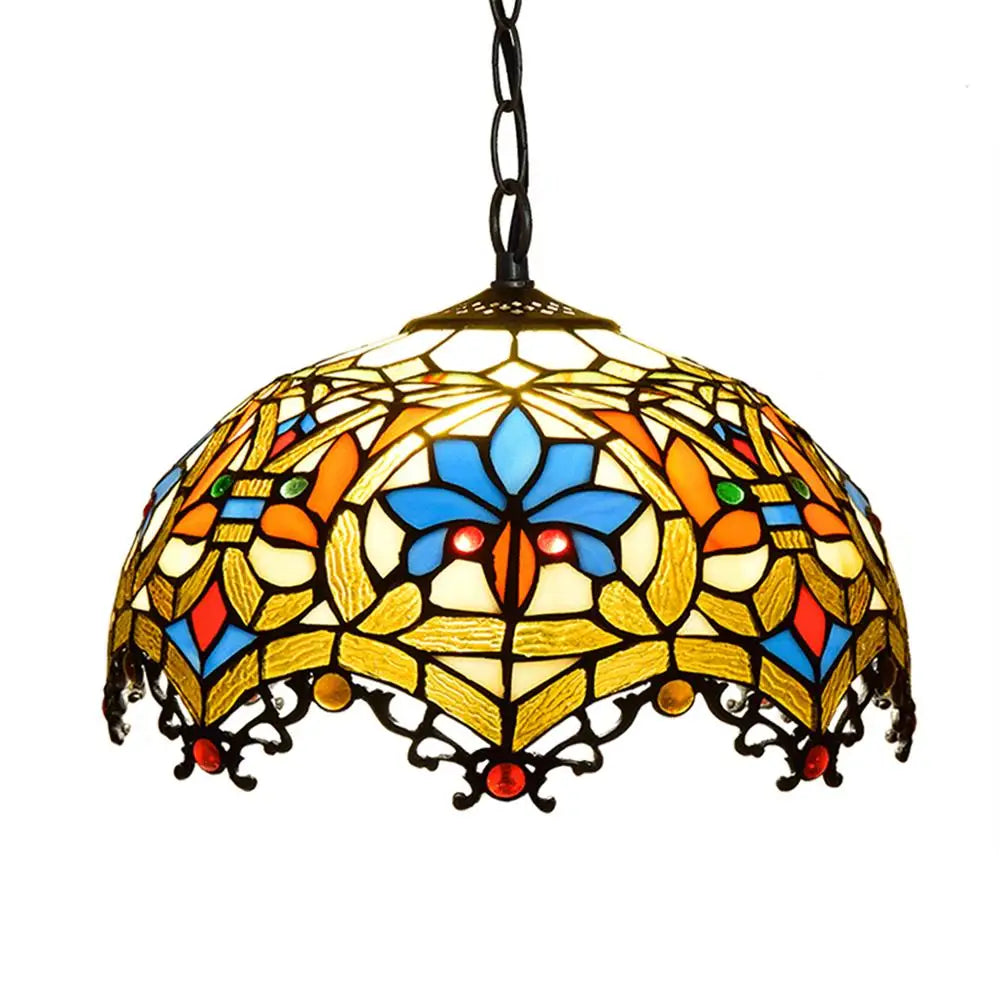
Tiffany Chandelier Buying Guide: Size, Hanging Height and Room-by-Room Ideas
Buying a Tiffany chandelier comes down to three numbers and one feeling. The numbers: the diameter that suits your room, the height it should hang at, and how many bulbs it needs to light the space. The feeling: the motif and glass palette that belong in that particular room. Get the numbers right and even a bold, multicolored stained glass chandelier looks like it was made for your home.
This guide walks through the practical rules designers use, explains when a chandelier, a pendant or a flush ceiling light is the better choice, and ends with room-by-room ideas for dining rooms, entryways, kitchen islands and home bars.
Rule 1: Size the Diameter to the Room
The quickest sizing formula is easy to remember: add the length and the width of the room in feet, and use that sum as the chandelier diameter in inches.
- A 10 x 12 ft dining room: 10 + 12 = 22, so look for a chandelier around 22 inches wide.
- A 12 x 14 ft living room: 12 + 14 = 26, so roughly 26 inches wide.
- A 9 x 10 ft breakfast nook: 9 + 10 = 19, so about 19 inches, or a single pendant instead.
Treat the result as a starting point, not a strict limit. Stained glass reads visually heavier than clear crystal or open metal arms, because the colored panels block the view through the fixture. If you are torn between two sizes, a Tiffany-style piece can usually go a couple of inches smaller than a clear-glass chandelier and still hold its own.
When a large Tiffany chandelier makes sense
A large Tiffany chandelier earns its place in rooms where the ceiling is generous and the fixture becomes the focal point: a two-story foyer, a great room with a vaulted ceiling, or a long dining room seating eight or more. In these spaces, an undersized fixture looks like an afterthought. A useful check for tall rooms is to allow about 2.5 to 3 inches of fixture height for every foot of ceiling height, so a 10 ft ceiling can comfortably carry a chandelier 25 to 30 inches tall.
Size to the table, not just the room
Over a dining table, the table matters more than the room. Aim for a chandelier diameter between one half and two thirds of the table width, and keep at least 6 inches between the edge of the fixture and the edge of the table on each side. A 42-inch-wide table pairs well with a fixture between 21 and 28 inches across. For long rectangular tables, two matching pendants or a linear arrangement often balances better than one round chandelier.
Rule 2: Get the Hanging Height Right
Height is where most installations go wrong. These are the standard guidelines:
| Location | Recommended height |
|---|---|
| Tiffany chandelier over dining table | Bottom of the fixture 30 to 36 inches above the tabletop (8 ft ceiling) |
| Higher dining room ceilings | Add about 3 inches for each extra foot of ceiling height |
| Kitchen island pendants | Bottom of the shade 30 to 36 inches above the countertop |
| Walkways, entryways, living areas | At least 7 ft of clearance from the floor to the bottom of the fixture |
| Two-story foyer | Roughly level with the second floor, or centered in a window seen from outside |
With stained glass, height also controls glare. Hang the shade too high above a table and diners look straight up into the bulbs. Within the 30 to 36 inch band, the glass hides the light source and throws color down onto the table, which is exactly the effect you are paying for.
Before you order, check whether the fixture comes with an adjustable chain or rod, and measure your ceiling height precisely. If you are working from a low ceiling, the chain length available matters as much as the shade itself.
Chandelier, Pendant or Flush Ceiling Light?
The word “chandelier” gets used loosely, so it helps to separate the three main styles of hanging Tiffany lamps.
Chandeliers
A chandelier has several light sources, either multiple shades on arms or one large shade housing several bulbs. It is the right choice when a single fixture needs to light a whole room or a large table. Browse the full range of Tiffany chandeliers to compare multi-arm designs with single-bowl styles.
Pendants
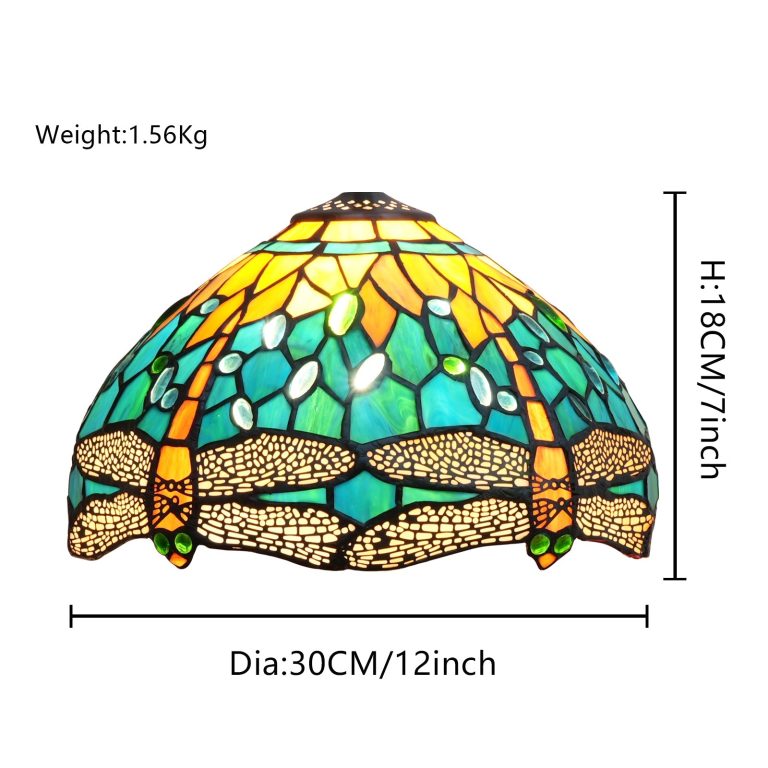
A pendant is a single shade on a chain, cord or rod. Pendants are ideal for smaller tables, breakfast nooks, bedside lighting and kitchen islands, where you can hang two or three in a row. A compact option such as this 30 cm stained glass hanging pendant for dining rooms and hallways (about 12 inches across) suits a small round table or a narrow hall. You can explore more shapes and palettes among our Tiffany pendant lights.
Flush and semi-flush ceiling lights
If your ceiling is under 8 ft, or the fixture sits in a hallway, bedroom or anywhere people walk underneath, a flush or semi-flush fixture is usually the smarter pick. You keep the glow of colored glass without anyone ducking. Our stained glass ceiling lights cover this low-profile category.
Number of Lights and Choosing Bulbs
Stained glass absorbs part of the light passing through it, and darker glass absorbs more. A deep amber or ruby shade gives a warm, moody glow; a cream or pale opalescent shade lets more light through. Keep this in mind when deciding how many lights you need.
- Ambient vs. task light: a Tiffany chandelier is primarily mood and ambient lighting. In a kitchen or a dining room where you also read or work, pair it with recessed lights, under-cabinet strips or wall lights on a separate switch.
- Multi-light fixtures for large rooms: for rooms where the chandelier is the main light source, choose a fixture with several bulbs, such as a 6-light or 8-light design, rather than a single large bowl with one socket.
- Respect the maximum wattage: always use bulbs at or below the rating printed on the fixture. LED bulbs run much cooler than incandescent ones, which is kinder to the glass and the solder joints in an enclosed shade.
- Color temperature: warm white bulbs around 2700K bring out amber, red and gold tones. Very cool white light can make colored glass look flat.
- Add a dimmer: a dimmable LED bulb with a compatible dimmer switch lets one fixture handle both dinner parties and everyday meals.
Choosing Motifs and Palette Room by Room
Tiffany-style glass carries strong patterns: dragonflies, florals, leaves and vines, geometric and mission designs. A simple approach is to pick the palette from the room and the pattern from the mood you want.
Dining room
The dining room is the classic home of the stained glass chandelier. Warm palettes, amber, honey, cream and ruby, flatter food and skin tones and suit wood tables. Floral and dragonfly motifs feel traditional and romantic; geometric panels lean toward Craftsman and Art Deco interiors. In a dining room with blue or green walls, a cool-toned piece like this vintage blue stained glass chandelier with 8 lights ties the scheme together while giving enough light for a full table.
Entryway and foyer
The entryway sets the tone for the whole house, and it is often viewed from below and from outside. Choose a fixture with a strong silhouette and bright, varied colors, since the shade will be seen from several angles. Remember the 7 ft clearance rule; in a single-story entry with a standard ceiling, a semi-flush ceiling light or a short pendant is safer than a full chandelier.
Kitchen island
Over an island, two or three matching pendants usually work better than one chandelier. As a rule of thumb, leave about 24 to 30 inches between pendants and at least 6 inches between the outer pendants and the ends of the counter. Rustic and farmhouse kitchens pair well with dark metalwork and mushroom-shaped shades, like this rustic wrought iron Tiffany pendant. Lighter glass is the practical choice here, because you still need to see what you are chopping.
Home bar and game room
A bar or game room is the one place where deep, saturated colored glass chandeliers really shine. Rich greens, reds and ambers create a pub or speakeasy atmosphere, and lower light levels are part of the appeal. Over a pool or card table, follow the same logic as the dining table: size the fixture to the table and keep the bottom of the shade low enough to hide the bulbs from players’ eyes.
Quick Checklist Before You Buy
- Measure the room (length + width in feet = diameter in inches).
- Measure the table or island and size the fixture to it.
- Measure the ceiling height and check the chain or rod length of the fixture.
- Decide whether you need a chandelier, a pendant or a flush ceiling light.
- Count the bulbs and check the maximum wattage and bulb base.
- Pick a palette that matches the room and a motif that matches its style.
- Plan for a qualified electrician to install it, especially for heavier fixtures that may need a support-rated ceiling box.
Frequently Asked Questions
What size Tiffany chandelier do I need for my dining room?
Start by adding the room’s length and width in feet; the total is a good diameter in inches. Then check it against your table: the fixture should be roughly one half to two thirds of the table width, with at least 6 inches of clearance from each table edge.
How high should a Tiffany chandelier hang over a dining table?
With an 8 ft ceiling, hang the bottom of the chandelier 30 to 36 inches above the tabletop. For higher ceilings, raise it by about 3 inches for every additional foot. This height keeps the bulbs hidden behind the glass and casts color onto the table.
Is a pendant or a chandelier better over a kitchen island?
For most islands, a row of two or three pendants spreads the light more evenly than one chandelier. Hang them 30 to 36 inches above the countertop and space them evenly along the island.
Can I use LED bulbs in a stained glass chandelier?
Yes, and they are often the better choice. LED bulbs produce far less heat than incandescent bulbs, which is easier on enclosed glass shades. Choose a warm white color temperature and make sure the bulb base and wattage match the fixture’s specifications.
What if my ceiling is too low for a chandelier?
Below 8 ft, or wherever people walk underneath, a flush or semi-flush stained glass ceiling light keeps the look of a Tiffany fixture while preserving headroom. Over a table, where nobody walks, a pendant on a shortened chain can still work.