How to Choose a Replacement Tiffany Lamp Shade (Size, Fitter & Style Guide)
Choosing a replacement Tiffany lamp shade comes down to four checks: the diameter that suits your base, the way the shade attaches (the fitter), how much heat the bulb gives off, and a glass palette that works with the metal finish. Get those right and a new stained glass shade will sit level, light evenly and look as if it always belonged on that base. This guide walks through each step in order, so you can measure once and shop with confidence.
Step 1: Measure the base you already have
Before looking at patterns, take a tape measure to the lamp. You need three numbers and one observation.
- Base height to the socket. Measure from the table surface to the top of the socket (where the bulb screws in). This tells you how tall the lamp will stand once a shade is in place and helps you pick a proportional diameter.
- Height of the hardware above the socket. If the lamp has a threaded rod, harp or upright arms (often called a spider or bridge), measure from the socket to the top of that hardware. This is the point the shade will rest on, so it determines how far the glass hangs down.
- Width of the base foot. A wide, heavy foot can carry a larger shade without looking top-heavy; a slim stem calls for something lighter.
- Type of attachment. Look closely at how the old shade was held: a finial screwed onto a threaded rod, a ring clamped under the socket, or a collar on a pendant fitting. More on this in Step 3.
If you are replacing a broken shade, measure what is left of it too: the bottom diameter (edge to edge across the widest point), the height from the top opening to the lower rim, and the diameter of the top opening or cap. These three figures are the fastest way to find a like-for-like match.
Step 2: Pick the right diameter (10, 12 or 16 inch)
Stained glass shades are usually described by their bottom diameter. The common sizes cover most household lamps, and each one has a natural job.
| Shade diameter | Typical use | What it pairs with |
|---|---|---|
| 8 to 10 inches | Accent and bedside lamps, small pendants | Short or slender bases, desks, nightstands, hallway consoles |
| 12 inches | Mid-size table lamps, chandelier arms, wall fixtures | Medium bases, multi-arm chandeliers, side tables in smaller rooms |
| 14 to 16 inches | Statement table lamps, floor lamps, large pendants | Tall, heavy bases, sofa end tables, reading corners, dining tables |
| 18 inches and up | Floor lamps and feature pendants | Floor lamp bases and fixtures hung over large tables |
A useful rule of thumb: the shade’s diameter should be close to the height of the base, and the lower rim should hide the socket and bulb when you are seated next to the lamp. A shade that is too narrow makes the base look oversized; one that is too wide can tip a light stand and spills glare under the rim.
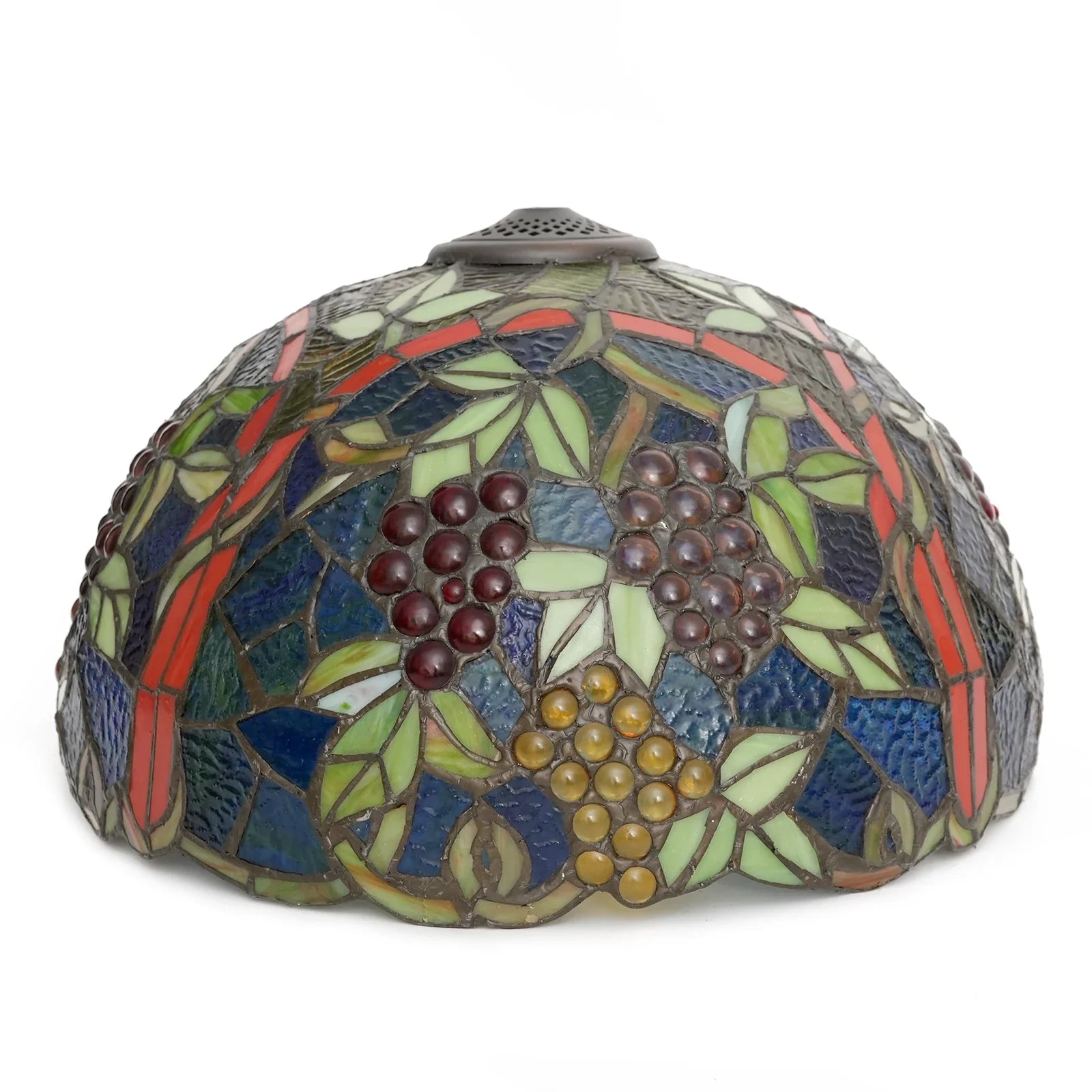
The 16 inch Tiffany lamp shade is the classic size for full table lamps and floor lamps. Our 16-inch replacement lampshade in handmade tinted glass has a 40 cm diameter and is listed as suitable for table lamps, pendants and ceiling lights, which makes it a flexible option when you are rebuilding a lamp around an existing base.
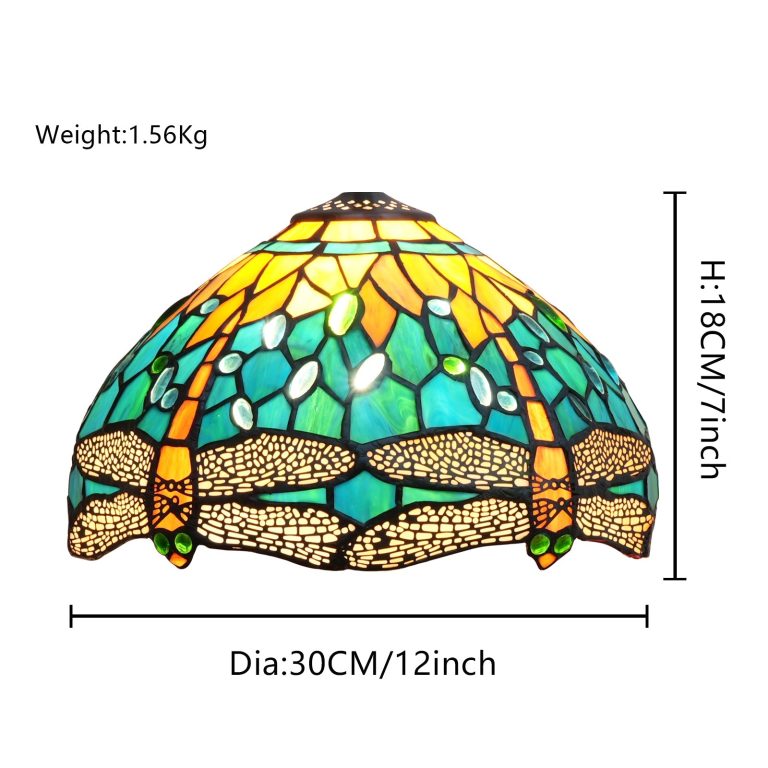
For chandeliers with several arms, smaller shades keep the fixture balanced. A 12-inch replacement shade designed for Tiffany chandeliers, with a vine and flower pattern, is a good example of a size that fills the arm without crowding its neighbours.
Step 3: Match the fitter so the shade actually fits
The fitter is the hardware connection between the shade and the lamp. It is the most common reason a replacement Tiffany lamp shade does not sit correctly, so check it before you buy.
Threaded rod with finial (spider or bridge)
Most stained glass table lamps use this system. Upright arms or a central rod rise above the socket, the shade’s metal top cap (sometimes called a vase cap or crown) drops over a threaded tip, and a decorative finial screws down to lock it. Compare the opening in the shade’s cap with the thread on your lamp, and confirm the arms are tall enough for the shade to clear the bulb.
Harp with finial
A harp is the U-shaped wire frame that clips around the socket. It works well with lightweight fabric shades, but heavy glass can make a slim harp wobble. If your base has a harp and you want a glass shade, check that the harp is sturdy and the correct height, or consider swapping it for a fitting built for heavier shades.
Uno fitter
An uno fitter is a ring that sits directly on the socket, held by the socket shell or a threaded collar. It is more common on fabric and smaller glass shades. The ring diameter must match your socket size.
Pendant and ceiling collars
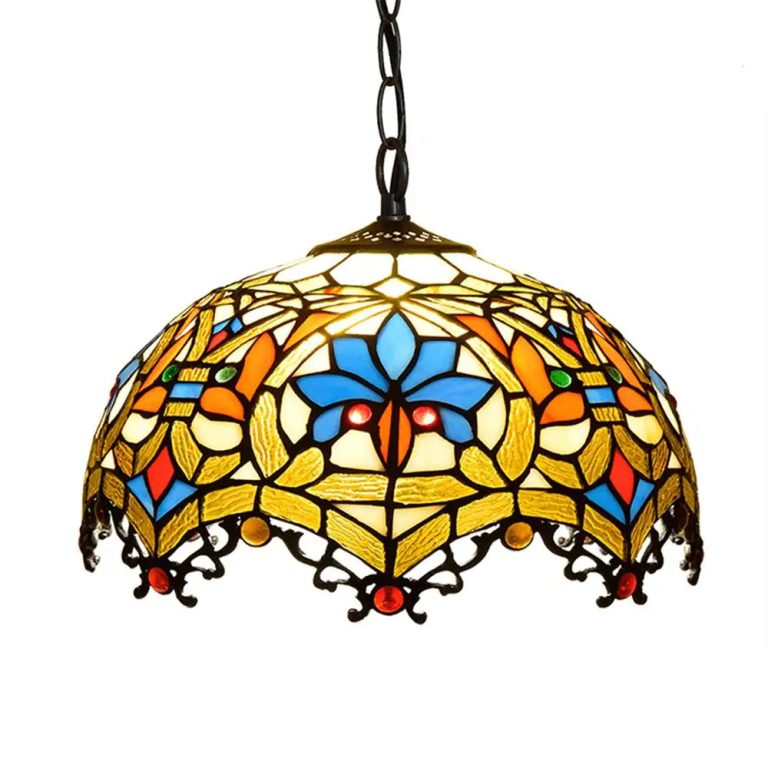
Hanging fixtures usually hold the shade with a collar or ring around the socket, sometimes with set screws. Measure the opening at the top of the shade and the diameter of the collar so the glass is supported by its metal rim, not by the glass itself.
If in doubt, photograph the top of your base and the old shade, write down your measurements, and send them to our customer service team before ordering.
Step 4: Check the bulb and wattage
Stained glass is assembled from many small pieces joined with copper foil and solder or lead came. Heat from the bulb is the main long-term stress on those joints, so the bulb deserves a minute of attention.
- Read the socket label. Every lamp has a maximum wattage marked on or near the socket. Never exceed it, whatever shade you fit.
- Prefer LED bulbs. LEDs run much cooler than incandescent bulbs for the same light output, which is kinder to the glass and the solder lines.
- Choose warm light. A warm white color temperature brings out amber, cream and red glass the way these lamps were designed to be seen. Very cool white tends to flatten the colors.
- Keep clearance. The bulb should not touch the glass. If the shade sits low, use a smaller-globe bulb.
Step 5: Choose a shape: dome, cone, bell or square
Shape changes both the look of the lamp and the way light falls around it.
Dome
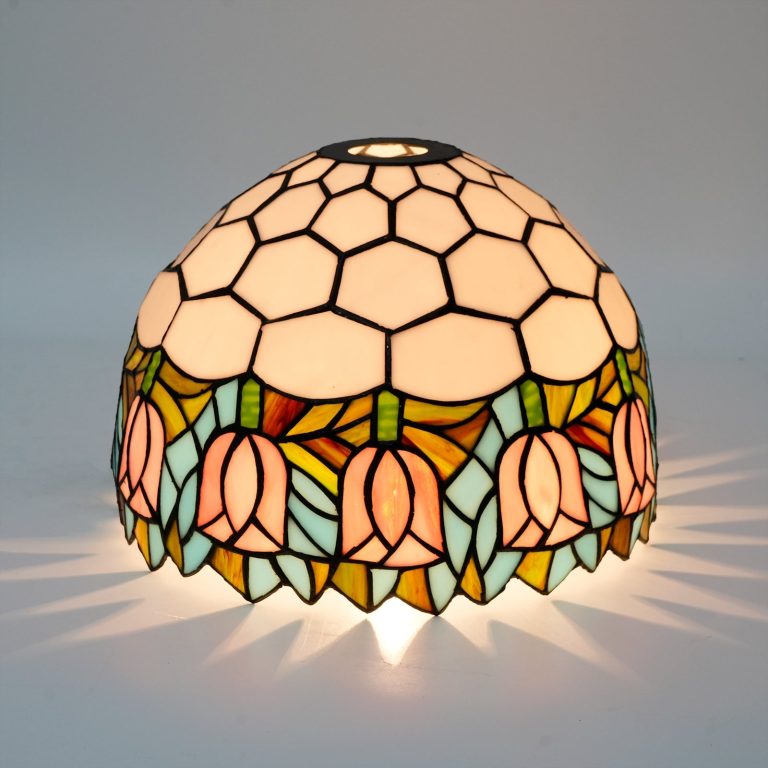
The rounded dome is the shape most people picture when they think of Tiffany-style lighting. It gives a soft, even glow across the whole surface and suits traditional bronze bases and floral or dragonfly patterns.
Cone
A conical shade has straighter sides and a narrower top, which directs more light downward. It is a good choice for reading lamps and pendants over a table. Our conical lampshade in white and blue glass shows how this profile reads lighter and more modern.
Bell
Bell shades flare out at the bottom, creating a wider pool of light and a slightly more Victorian silhouette. A bell-shaped shade in shaded green stained glass is a natural partner for library-style bases and dark wood furniture.
Square and paneled
Square or paneled shades use larger, flatter pieces of glass, often in geometric layouts. They suit Arts and Crafts and Art Deco bases with straight lines.
Step 6: Match the glass colors to the base finish
A replacement shade looks right when the glass and the metal speak to each other. A few pairings work reliably:
- Antique bronze or dark brown bases: amber, honey, cream, deep red and green glass. This is the classic combination and the one most associated with antique Tiffany lamp shades.
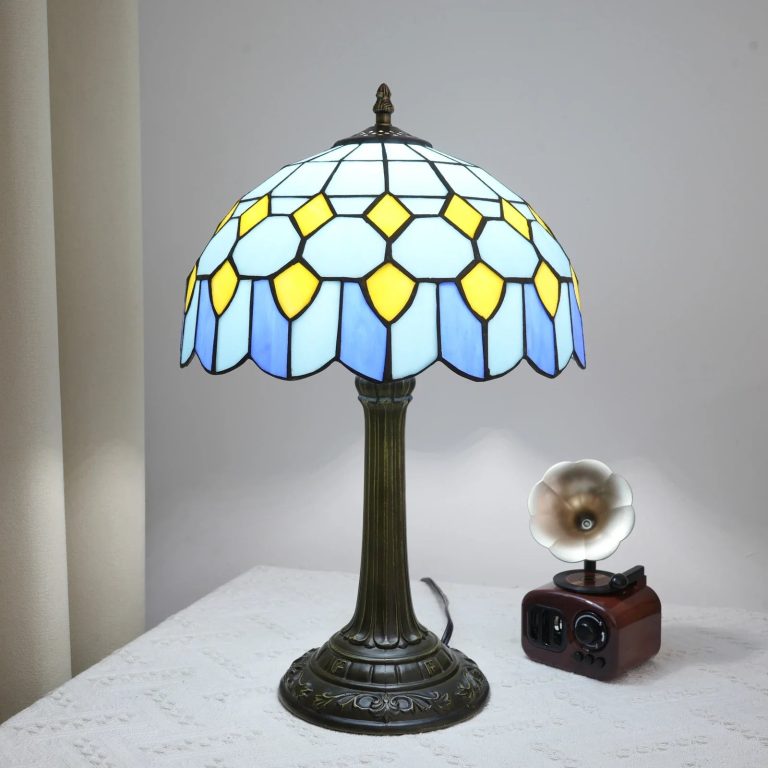
- Black or dark iron bases: high-contrast palettes such as blue and white, jewel tones or bold geometric patterns.
- Brass or gold-tone bases: cream, ivory, soft yellow and pastel florals that echo the warmth of the metal.
- Nickel or silver-tone bases: cooler blues, greens and clear or opalescent glass.
Antique, Dale Tiffany and Tiffany-style shades: what to know
Original lamps from Tiffany Studios were produced in New York in the late 19th and early 20th centuries and are collectors’ pieces today; you can read more about their history in the Tiffany lamp article on Wikipedia. Most lamps found in homes are Tiffany-style lamps made by later producers, including brands such as Dale Tiffany, which is a company name rather than a connection to the original studio.
For a Tiffany-style or Dale Tiffany lampshade replacement, the brand matters less than the measurements. If the diameter, height, top opening and fitter match your base, a shade from another maker will usually fit. For a genuine antique, ask a specialist restorer before changing parts, since original hardware can affect value.
When a complete lamp makes more sense
Sometimes the base is the problem: a cracked stem, worn wiring or hardware that no longer holds a heavy shade. In that case, rewiring and refitting can cost more effort than starting over. Browsing complete Tiffany table lamps lets you pick a matched base and shade in one go. If your base is sound, our full range of Tiffany lampshades covers domes, cones, bells and square designs in several sizes.
Frequently asked questions
How do I measure a Tiffany lamp shade?
Measure the bottom diameter straight across the widest point, the height from the top opening to the lower rim, and the diameter of the top opening or cap. Those three numbers, plus the type of fitter on your base, are all you need to find a compatible replacement.
Can I put a glass Tiffany shade on a lamp that had a fabric shade?
Sometimes. Glass is much heavier than fabric, so the base must be stable and the fitter strong enough. Lamps with a thin harp or a light base are often not suitable; a base with a threaded rod or upright arms is a better candidate.
What size shade fits a standard Tiffany table lamp?
Full-size Tiffany-style table lamps most often take a shade around 16 inches wide, while smaller accent lamps use shades around 10 to 12 inches. Always compare with your own base height and the hardware above the socket.
Which bulb should I use under a stained glass shade?
Use an LED bulb in warm white that stays within the maximum wattage printed on the socket. LEDs produce less heat, which helps protect the glass and solder joints over time.
Will a replacement shade fit a Dale Tiffany lamp?
It can, as long as the diameter, height, top opening and fitter type match your lamp. Measure your existing shade and hardware first, then compare with the dimensions listed on the product page.