Does Tiffany Still Make Lamps? Authentic vs. Tiffany-Style Lamps Explained
No. Tiffany Studios, the New York workshop that produced the original leaded-glass lamps, closed in 1932, and no company has made official Tiffany lamps since. Every genuine Tiffany lamp is therefore an antique made roughly between the 1890s and the early 1930s. Everything sold new today, in shops, catalogs and online, is a Tiffany-style lamp: a lamp built with the same stained glass and copper foil technique, but not by the original studio. This guide explains how that happened, how experts recognize an authentic piece, and how to judge a good Tiffany-style lamp if you simply want the look in your home.
A short history of Tiffany lamps
Louis Comfort Tiffany (1848-1933) was the son of Charles Lewis Tiffany, founder of the famous jewelry house Tiffany & Co. Rather than follow his father into jewelry, Louis trained as a painter and then turned to interior design and glassmaking. In the late nineteenth century he developed his own opalescent art glass, sold under the name Favrile, and his studios began using it for windows, mosaics and, eventually, lamps.
The lamps became the most recognizable product of the workshop. Shades were assembled from hundreds of small, hand-cut pieces of colored glass, each edge wrapped in copper foil and soldered to its neighbors, then mounted on cast bronze bases. Many of the best-known designs, including floral and insect motifs such as the Dragonfly and Wisteria, are now credited to Clara Driscoll and the team of women glass cutters she led within the studio.
Tastes changed after the First World War. The ornate, nature-inspired Art Nouveau look gave way to the cleaner lines of Art Deco, demand fell, and Tiffany Studios went bankrupt in 1932. Louis Comfort Tiffany died the following year. The history of the Tiffany lamp is well documented, and it ends there: no successor company went on producing the original designs as genuine Tiffany Studios pieces.
Does Tiffany still make lamps today?
This is where the confusion usually starts. Tiffany & Co., the jeweler, still exists and still uses the Tiffany name, but it is a separate business from Tiffany Studios. Whatever home objects the jeweler sells under its own brand, it is not continuing the historic Tiffany Studios production of leaded stained glass lamps. So when people ask “do they still make Tiffany lamps?”, the honest answer has two parts:
- Original Tiffany lamps: no new ones have been made since the studio closed. The supply is fixed, which is why authentic examples are rare and sought after by collectors and museums.
- Tiffany-style lamps: yes, they are made in large numbers today by workshops and manufacturers around the world, using the same basic technique of cut glass, copper foil and solder.
There is also no “official Tiffany lamp website” selling new authentic lamps. Any shop presenting a brand-new lamp as an original Tiffany is either using the word loosely or misleading its customers. Reputable sellers, including us, describe their pieces as Tiffany-style or Tiffany-inspired.
How to tell if a Tiffany lamp is real
Authenticating a Tiffany lamp is specialist work, and anyone considering a serious purchase should rely on a recognized auction house or an independent expert. That said, the clues professionals look at are well known, and they help explain why a real piece is so different from a modern one.
1. Signatures and markings
Genuine bases are usually stamped “TIFFANY STUDIOS NEW YORK”, often with a model number, on the underside. Shades frequently carry a small metal tag or stamp reading “TIFFANY STUDIOS NY” on the inner rim. However, signatures are the easiest thing to fake: forged stamps and tags are common, and some later reproductions were signed to look authentic. A signature is a starting point, never proof on its own.
2. The glass itself
Tiffany glass has depth. Look for mottled, streaked, rippled or folded “drapery” glass, several colors swirled within a single piece, and textures that change when the lamp is lit versus unlit. Flat, uniform glass with printed or painted color is a strong sign of a modern piece.
3. Copper foil and solder lines
Original shades show fine, consistent leading that follows the design closely. The solder has aged to a dark, even tone. Thick, irregular lines or bright, shiny solder suggest newer work or later repairs.
4. Bronze base and patina
Authentic bases were cast in bronze and finished with a patina that, after a century, looks rich and naturally uneven, with wear where hands touch most often. Lightweight bases, zinc alloys, resin, or a finish that looks uniformly painted point to a reproduction.
5. Weight and construction
Originals are heavy for their size because of the solid bronze and the dense leaded shade. Inspect the fittings too: period sockets, the way the shade sits on its base, and construction details all have to be consistent with the era.
6. Provenance
For high-value pieces, documented ownership history matters as much as the object. A credible chain of sales, exhibition records or an auction catalog entry carries far more weight than a story from the seller.
| Feature | Authentic Tiffany Studios lamp | Tiffany-style lamp |
|---|---|---|
| Period | About 1890s to early 1930s | Made today |
| Maker | Tiffany Studios, New York | Independent workshops and manufacturers |
| Markings | Stamped base, tagged or stamped shade | Should not claim a Tiffany Studios signature |
| Glass | Favrile and other art glass with strong texture | Varies from basic to high-quality textured glass |
| Where to buy | Major auction houses, specialist dealers | Lighting shops and online stores |
| Main use | Collecting and investment | Everyday decorative lighting |
What “Tiffany-style” means today
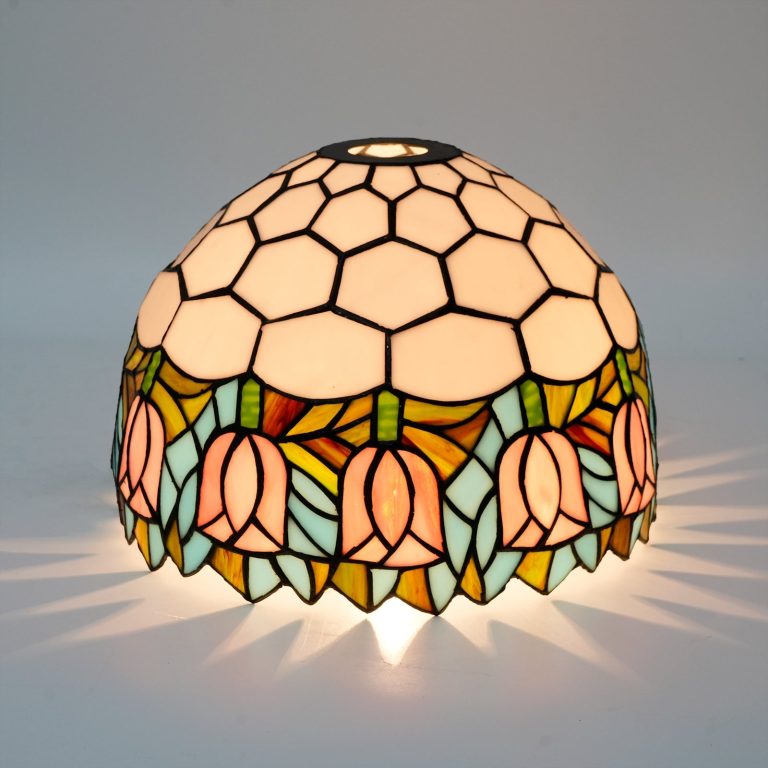
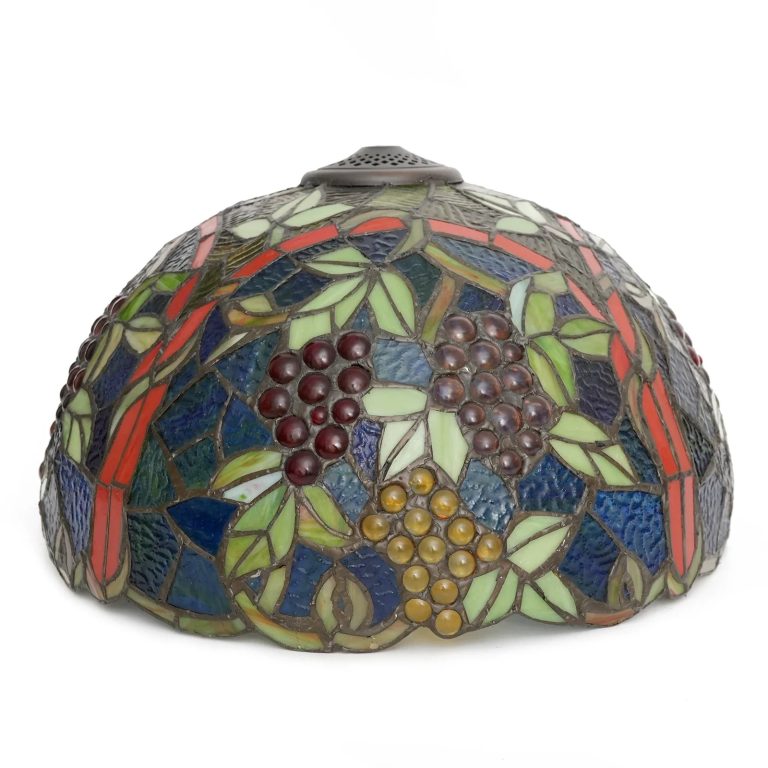
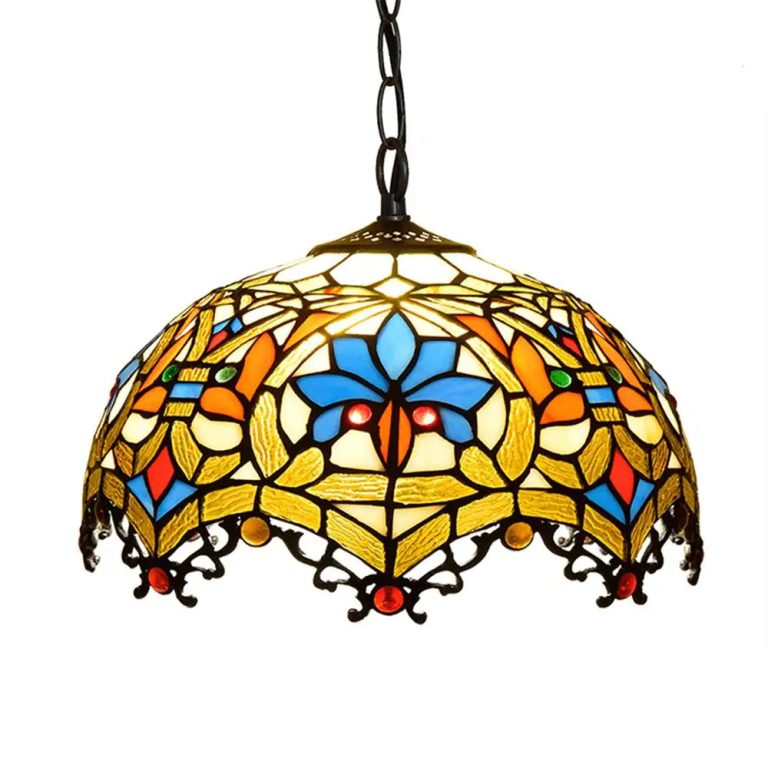
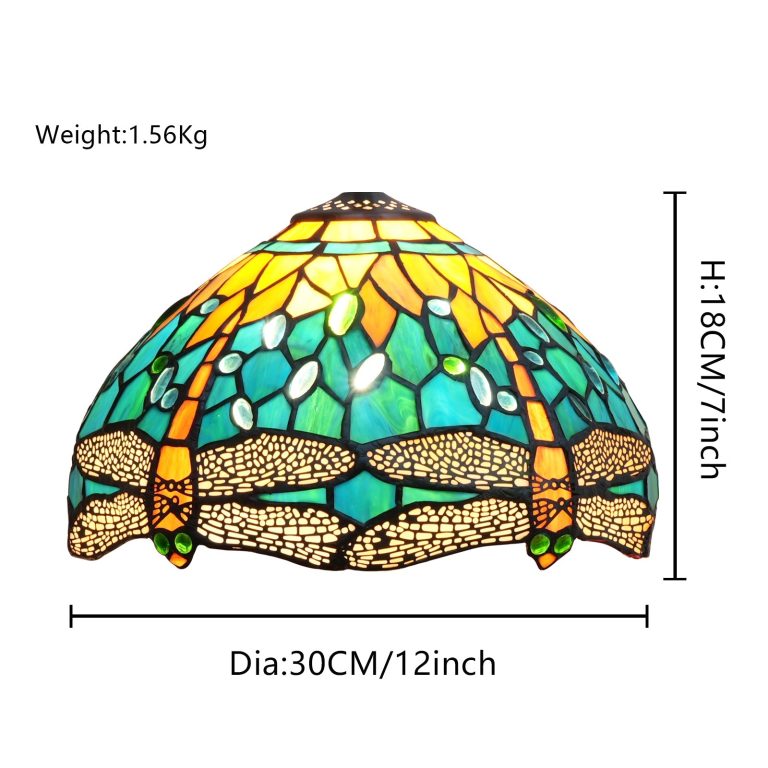
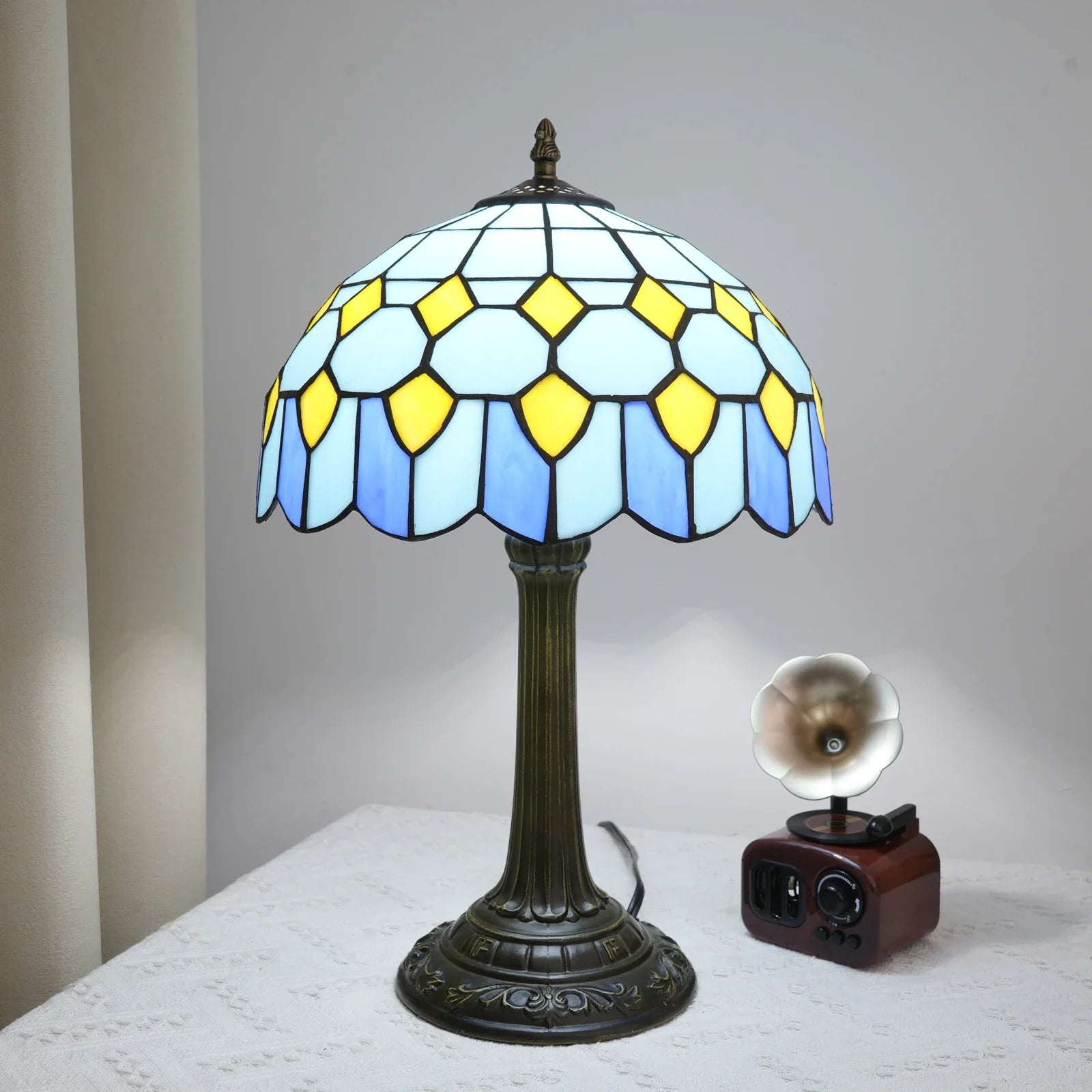
“Tiffany-style” describes a technique and a look, not a maker. A Tiffany-style lamp has a shade made of individual pieces of colored glass, joined with copper foil and solder, usually in floral, geometric, dragonfly or Art Nouveau patterns. It recreates the warm, jewel-toned light that made the originals famous, at a price that makes sense for a bedside table or a living room.
The category covers a wide range of shapes. Alongside the classic Tiffany-style table lamps, you will find standing models for reading corners, pendants and chandeliers for dining tables, and wall lights. The original studio produced floor lamps and hanging shades too, which is why Tiffany floor lamps and large dome shades remain some of the most popular reproductions.
How to judge a quality Tiffany-style lamp
Not all reproductions are equal. If you are buying for the look rather than as an investment, these are the points that separate a lamp you will enjoy for years from one that disappoints:
- Real stained glass. Each segment should be a separate piece of glass, not a printed acrylic or painted plastic shade. Hold it up to the light: real glass shows variations in color and texture.
- Clean copper foil work. Solder lines should be smooth, even and fully joined, with no gaps where light leaks through and no sharp edges on the inside of the shade.
- Accurate colors. Good shades balance their tones so the pattern reads clearly both lit and unlit. Amber, cream, green and deep red are classic choices for a reason.
- A stable, well-finished base. The base should be heavy enough to carry the shade without tipping, with a finish that is even and free of flaking.
- Clear specifications. A serious seller lists shade diameter, overall height and bulb type, so you can check the lamp suits the space and your bulbs before ordering.
- Honest description. The lamp should be presented as Tiffany-style. A modern lamp sold as “original Tiffany” is a red flag about the seller, whatever its quality.
Choosing a Tiffany-style lamp for your home
Start with the space. A small shade suits a nightstand or a desk, while a wide dome makes a statement on a console or a sideboard; our large Tiffany lamps are designed for living rooms and open spaces where the lamp becomes a focal point. Then pick a pattern that matches the room: geometric and Art Deco designs feel structured and calm, while floral and baroque patterns bring color and movement.
A good example is this handcrafted stained glass table lamp with a baroque design, sized for a bedroom, bedside table or home office. It follows the traditional method: each piece of glass is cut, wrapped in copper foil and soldered into the pattern. You can read more about how our lamps are made and selected, including the checks each piece goes through before dispatch.
FAQ
Does Tiffany still make lamps?
No. Tiffany Studios closed in 1932 and no official Tiffany lamps have been made since. Tiffany & Co., the jewelry company, is a separate business and does not continue the Tiffany Studios lamp production. New lamps sold today are Tiffany-style reproductions.
Are Tiffany-style lamps real stained glass?
Quality Tiffany-style lamps are made from real stained glass, cut into pieces, wrapped in copper foil and soldered together, the same technique the original studio used. Cheaper imitations may use plastic or printed shades, so always check the product description.
How can I tell if my Tiffany lamp is an original?
Look at the markings, the texture and depth of the glass, the quality and age of the solder, the weight and patina of the bronze base, and any documented provenance. Because signatures are often forged, have any lamp you believe to be original examined by an auction house or an independent specialist.
Is there an official Tiffany lamp website?
No. Because the original studio no longer exists, there is no official site selling new authentic Tiffany lamps. Genuine pieces change hands through auction houses and specialist antique dealers, while online lighting stores sell Tiffany-style lamps.
Why are original Tiffany lamps so expensive?
Supply is fixed, many lamps were damaged or lost over the past century, and the finest examples were made by hand with exceptional glass. Collectors and museums compete for the rare pieces in good condition, which keeps prices for authentic lamps very high.