Art Nouveau vs. Art Deco Lighting: How to Tell Them Apart (and Which Fits Your Home)
Short answer: Art Nouveau lighting is organic. Think flowing stems, dragonflies, wisteria, and glass that looks like it was painted by nature. Art Deco lighting is geometric. It’s all straight lines, stepped forms, fans, and sunbursts with a crisp, streamlined finish. Classic Tiffany lamps, with their leaded floral and insect shades, belong to the Art Nouveau tradition. This guide on art nouveau vs art deco lighting sets the two styles side by side, shows you how to spot each one in a few seconds, and explains how to choose (or combine) them at home.
Two Eras, Two Philosophies
The two styles came one after the other, and each one partly reacted against the one before.
Art Nouveau: nature as the blueprint
Art Nouveau grew up in the last years of the 19th century and peaked in the early 1900s. Designers were pushing back against mass-produced, heavily ornamented Victorian decor. They wanted handcraft, and they took their forms straight from the natural world. Lines curve and branch like vines. Shades curl inward like petals. Insects, birds, and blossoms aren’t just painted on the surface. They often are the structure of the piece.
Lighting was a natural fit for this way of thinking. Electric light was new in homes back then, and a glass shade let designers turn a bare bulb into something that glowed like a flower bed at dusk. That’s exactly where Louis Comfort Tiffany and his studio come in.
Art Deco: the machine age arrives
Art Deco took over after the First World War and defined the 1920s and 1930s. Its name comes from the 1925 international exhibition of decorative arts held in Paris. Art Nouveau looked to gardens. Art Deco looked to skyscrapers, ocean liners, jazz, and the speed of modern industry. Its forms are symmetrical and confident: zigzags, chevrons, stepped tiers, fan shapes, and radiating sunbursts. The materials got sleeker too, with polished chrome, nickel, frosted or etched glass, and bold contrasts like black and gold.
Art Nouveau vs Art Deco Lighting at a Glance
When you’re looking at a lamp and can’t decide, check these five points.
| Feature | Art Nouveau | Art Deco |
|---|---|---|
| Main period | Roughly 1890s to 1910s | Roughly 1920s to 1930s |
| Lines | Curving, asymmetrical, “whiplash” curves | Straight, symmetrical, stepped and angular |
| Motifs | Flowers, leaves, vines, dragonflies, butterflies, peacocks | Geometric panels, fans, chevrons, sunbursts, stylized shapes |
| Glass | Rich, mottled, streaked colors that mimic nature | Clean color blocks, frosted, opal, or strong two-tone contrast |
| Metal finish | Bronze, warm patinas, organic bases shaped like roots or stems | Chrome, nickel, brass, polished and streamlined bases |
| Overall mood | Romantic, soft, handcrafted | Glamorous, graphic, modern |
Are Tiffany Lamps Art Nouveau?
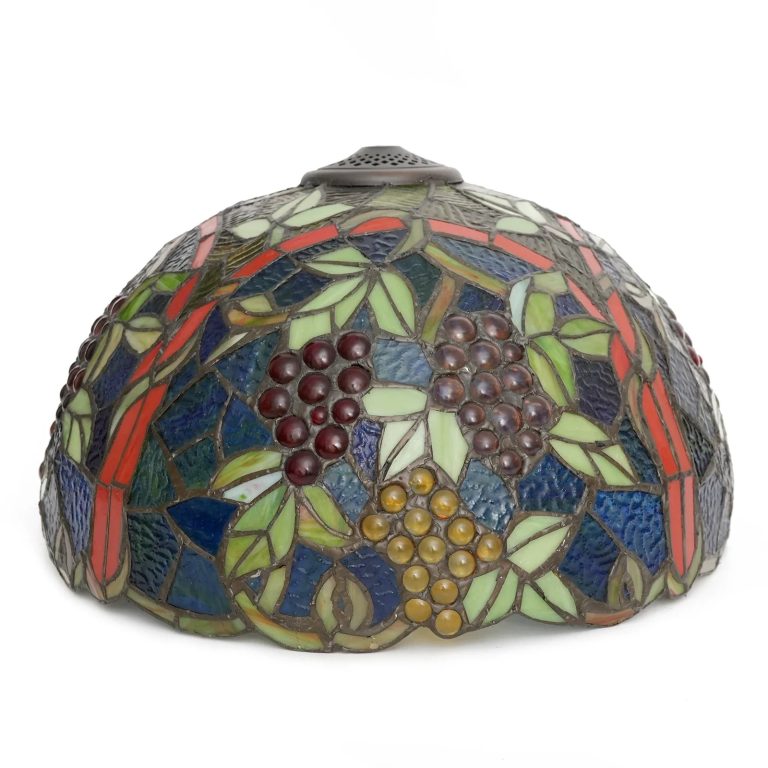
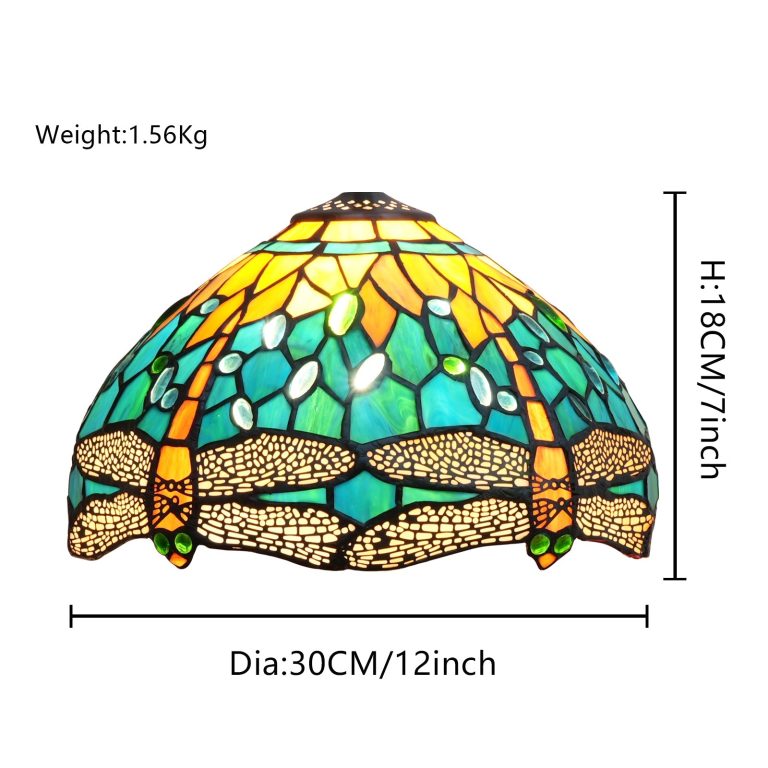
Yes, in most cases. The original lamps from Tiffany Studios in New York are textbook examples of American Art Nouveau. The studio used the copper-foil technique: each piece of glass is cut, wrapped in a thin copper strip, and soldered to its neighbors. That method let craftsmen follow the curve of a petal or the vein of a wing far more closely than older lead came could. Some of the best-known designs show it well, including dragonflies circling the lower edge of a dome, wisteria and peony shades, and bases cast to look like tree trunks or lily pads.
The color work matters just as much. Tiffany glass was famous for colors that shift inside a single piece, like a green that fades into amber or a blue streaked with violet. Lit from inside, the shade looks less like a pattern and more like a living scene. That depth is the best sign you’re looking at Art Nouveau design, whether the lamp is antique or a modern Tiffany-style piece.
Not every leaded glass lamp is Art Nouveau, though. Simple geometric shades made of repeating squares, triangles, or straight-sided panels sit closer to the Arts and Crafts or Art Deco look. That’s why “Tiffany” and “Art Deco” often turn up together in searches: the leaded glass technique carried on into later decades, while the motifs became more angular.
How to Recognize Each Style in Five Seconds
Signs you’re looking at Art Nouveau lighting
- The outline curves. Domes, tulip shapes, and scalloped or irregular lower edges that follow leaves or petals.
- The pattern tells a story from nature. Blossoms, vines, insects, or birds, often wrapped all the way around the shade.
- The glass has movement. Mottled, streaked, or rippled pieces in layered greens, ambers, pinks, and blues.
- The base looks grown, not built. Stems, roots, or flowing bronze forms with a dark patina.
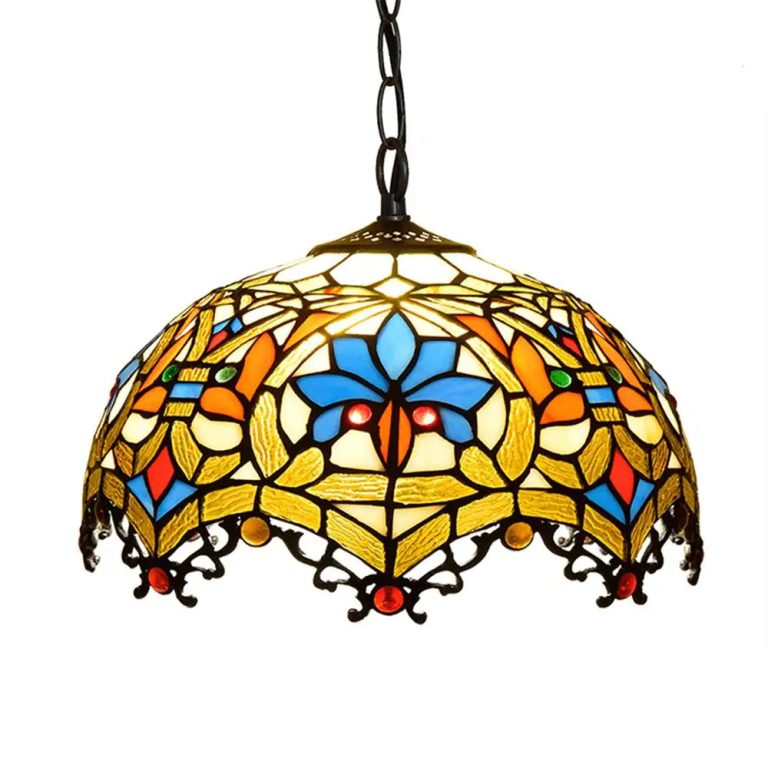
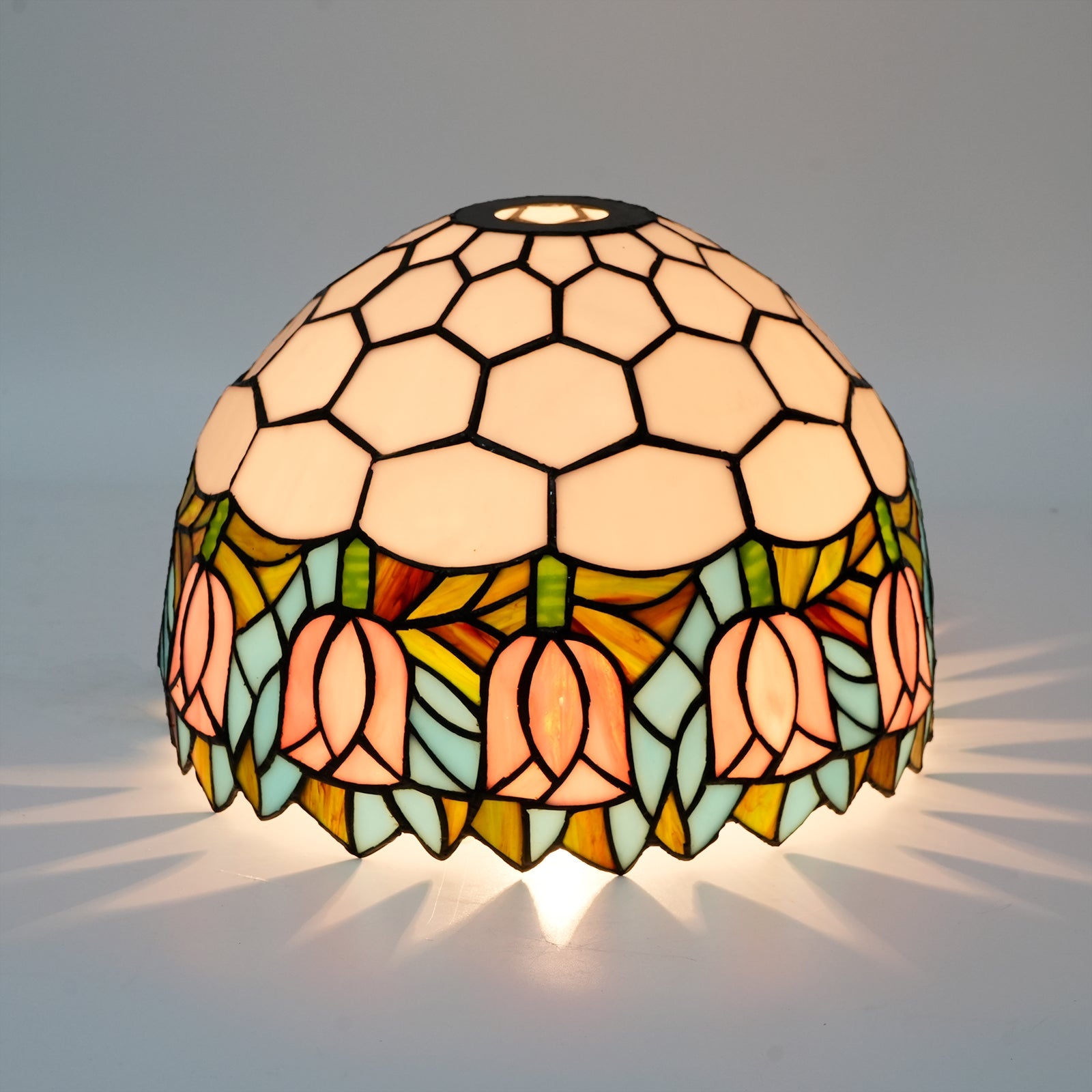
Our Art Nouveau floral tinted glass lampshade is a clear example: the flower pattern runs around the dome, and the colors blend into one another instead of sitting in separate blocks. The Tiffany-style dragonfly stained glass shade uses one of the most famous Art Nouveau motifs of all.
Signs you’re looking at Art Deco lighting
- The shape is architectural. Cones, tiers, polygons, and flat panels with crisp edges.
- The pattern repeats with precision. Rectangles, diamonds, rays, or fan segments laid out symmetrically.
- The palette is controlled. Often two or three colors used in bold contrast, such as cream with amber, or white with orange and yellow.
- The metal shines. Polished, streamlined bases and fittings, with no plant forms.
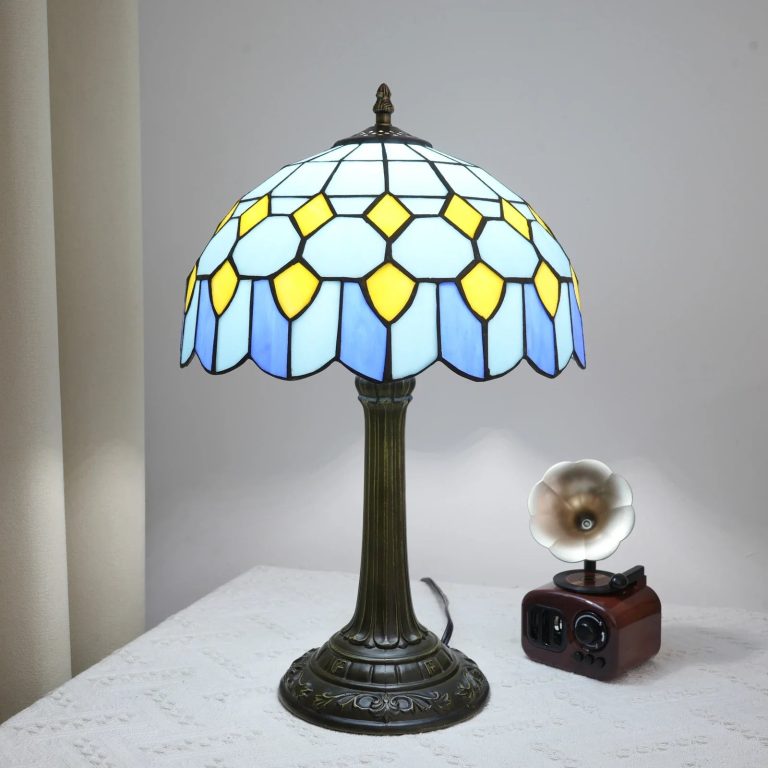
Compare the floral shade above with the geometric Art Deco tinted glass lampshade. Its glass is cut into regular panels, and the effect is graphic rather than romantic. The white and orange-yellow Art Deco shade shows how much a simple two-tone contrast can do once the light is on.
Art Nouveau and Art Deco Ceiling Lights
Most people picture table lamps, but both styles work just as well overhead, and ceiling fixtures are often where the difference shows most.
- Art Nouveau ceiling lights tend to be domed or bowl-shaped, with floral or dragonfly borders that you mostly see from below. Hung over a dining table, they cast warm, colored light onto the surface and create an intimate pool of light.
- Art Deco ceiling lights lean toward flush mounts, tiered or stepped shades, and geometric panels. They suit hallways, entryways, and living rooms where you want a clean, structured look.
If you’re looking for an Art Deco Tiffany ceiling light, look for leaded glass shades whose pattern is built from straight-edged segments rather than petals. That way you get the glow of stained glass with a more modern outline. You can compare both approaches in our collection of stained glass ceiling lights.
Which Style Fits Your Home?
Choose Art Nouveau if…
- Your home has wood, warm textiles, plants, or vintage furniture.
- You want lighting that feels soft and atmospheric more than bright and functional.
- You love color and want the lamp to be the focal point of the room, even when it’s switched off.
- You’re decorating a bedroom, reading nook, or dining room where mood matters most.
Choose Art Deco if…
- Your interior is mid-century, contemporary, or minimalist, with clean lines and fewer patterns.
- You like metallic accents, mirrors, velvet, and strong contrasts such as black and gold or cream and amber.
- You want a statement piece that still looks orderly and tailored.
- You’re lighting a home office, an entryway, or a living room with a more urban feel.
You can browse more options with that structured, geometric look in our Art Deco lamps collection.
How to Mix Both Styles Without Clashing
The two movements are close enough in time and craft that they can share a room, as long as you give the mix some structure.
- Pick a lead style. Let one style dominate, around two thirds of the room, and use the other as an accent. A geometric ceiling light with a single floral table lamp reads as intentional. An even split often reads as indecisive.
- Repeat one color. Amber and cream show up in both traditions. If your Art Nouveau shade has amber tones, choose an Art Deco piece with amber panels so the two talk to each other.
- Match metal tones. Keep the finishes in the same family, all warm (bronze, brass) or all cool (nickel, chrome), even when the shapes differ.
- Separate by function. Use Art Deco for ambient or overhead light and Art Nouveau for task or accent light at eye level, where you can see its detail up close.
- Give each piece space. Both styles are decorative. Avoid placing two richly patterned shades side by side on the same surface.
A Quick Note on Glass Colors and Light Quality
The style you pick also changes the light you get. Art Nouveau shades with dense, deep-colored glass give a warm, diffused glow and less direct light. They’re ideal for ambiance but less suited to detailed tasks. Art Deco shades with large areas of cream, white, or opal glass let more light through and spread it more evenly. If you need a lamp you’ll actually read by, choose lighter glass or pair a decorative shade with a separate task light. Bulb choice matters too: a warm white bulb brings out ambers and greens, while a cooler bulb can make some colors look flat.
Frequently Asked Questions
What is the main difference between Art Nouveau and Art Deco lighting?
Art Nouveau lighting uses curving, organic lines and motifs from nature such as flowers, vines, and dragonflies. Art Deco lighting uses symmetrical, geometric forms such as fans, chevrons, stepped tiers, and sunbursts, often with polished metal and bold color contrast.
Are Tiffany lamps Art Nouveau or Art Deco?
Classic Tiffany lamps are Art Nouveau. Their floral and insect patterns, naturalistic glass colors, and organic bronze bases are central to the American Art Nouveau movement. Tiffany-style lamps with purely geometric patterns lean closer to Art Deco or Arts and Crafts.
Can you put Art Nouveau and Art Deco lighting in the same room?
Yes. Choose one style to lead, repeat a shared color like amber or cream, and keep metal finishes in the same warm or cool family. A geometric ceiling light paired with a floral table lamp is an easy, balanced combination.
What colors are typical of Art Deco stained glass lamps?
Art Deco stained glass lamps usually rely on a limited palette used in strong contrast: cream with amber, white with orange and yellow, or white with blue. The glass is often laid out in regular geometric panels rather than blended, painterly sections.
Which style gives better light for reading?
Generally, shades with lighter glass let more light through. Many Art Deco designs use large cream or white areas, which makes them more practical for reading. Deep-colored Art Nouveau shades are best for mood lighting or paired with a dedicated task lamp.